
Grow Mushroom at Home: The Ultimate Beginner’s Guide to Fresh, Organic Mushrooms Indoors
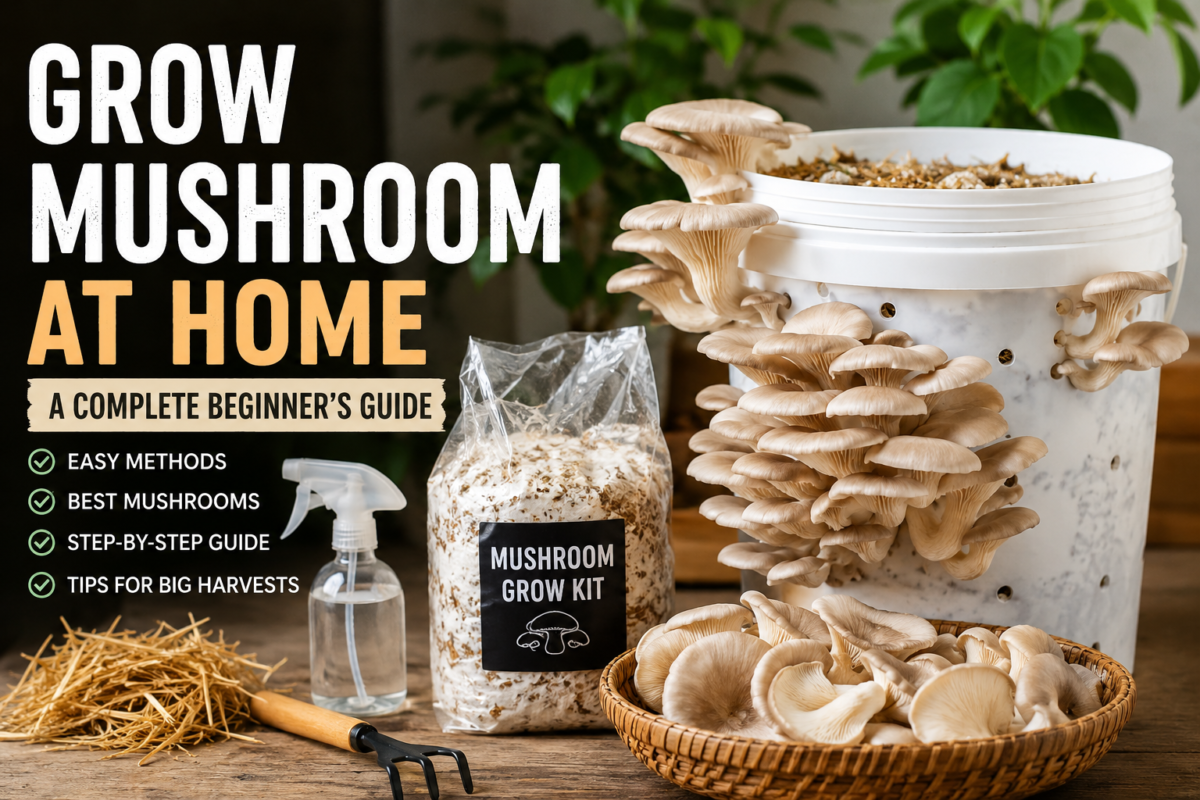
There’s something magical about harvesting your very own mushrooms right from your kitchen, basement, or backyard corner. One day you’re misting a strange-looking container, and the next morning—boom!—beautiful mushrooms appear almost overnight. It honestly feels like nature performing a tiny miracle in your home.
If you’ve ever wanted to grow mushroom at homemushrooms, you’re in the perfect place. Whether you’re dreaming of fresh oyster mushrooms for dinner, experimenting with a fun hobby, or trying to become more self-sufficient, growing mushrooms indoors is easier than most people think.
And the best part? You don’t need a giant farm, expensive equipment, or years of experience.
In this complete beginner-friendly guide, you’ll learn:
- How mushrooms grow
- The easiest mushrooms for beginners
- Supplies you actually need
- Step-by-step mushroom growing methods
- Common mistakes to avoid
- Indoor vs outdoor growing
- How to harvest and store mushrooms
- Tips from real growers
Let’s dive in!
Why People Love to Grow Mushroom at Home
More people than ever are learning how to grow mushroom at home—and for good reason.
Here’s why this hobby is exploding in popularity:
1. Fresh Mushrooms Taste Incredible
Store-bought mushrooms are fine… but freshly harvested mushrooms? Totally different experience!
Fresh oyster mushrooms, for example, have a rich earthy aroma and delicate texture that supermarket versions rarely match. The first time I cooked homegrown mushrooms in garlic butter, I couldn’t believe the difference. They tasted almost meaty and buttery at the same time. Absolutely amazing!
2. It Saves Money
Gourmet mushrooms can get expensive quickly. Varieties like shiitake, lion’s mane, and oyster mushrooms often cost a premium at grocery stores.
When you grow mushroom at home, you can produce large harvests for a fraction of the cost.
3. It’s Surprisingly Easy
Many beginners assume mushroom cultivation is highly technical. Truthfully, some advanced methods are complicated—but beginner methods are very simple.
You can start with:
- A mushroom grow kit
- A bucket
- Coffee grounds
- Straw
- Even cardboard!
4. It’s Fun and Educational
Watching mushrooms grow feels fascinating every single time. Kids especially love seeing tiny pins suddenly become full mushrooms overnight.
Honestly, it never stops being exciting!
Understanding How Mushrooms Grow
Before you grow mushroom at home, it helps to understand the basics.
Mushrooms are not plants. They are fungi.
The visible mushroom is actually just the “fruit” of a much larger underground network called mycelium.
Think of it like this:
- Mycelium = roots/body
- Mushroom = fruit
The mycelium spreads through a growing material called a substrate, feeding on nutrients until conditions are right for mushrooms to appear.
Common mushroom substrates include:
- Straw
- Sawdust
- Coffee grounds
- Wood logs
- Compost
Once humidity, temperature, and airflow are balanced, mushrooms begin to grow.
And they grow FAST!
Some mushrooms can double in size overnight. Seriously—it’s wild to witness.
Best Mushrooms for Beginners
If you’re new and want to grow mushroom at home successfully, start with beginner-friendly varieties.
Oyster Mushrooms
These are the easiest mushrooms for beginners.
Why they’re great:
- Grow quickly
- Tolerate mistakes
- Grow on many materials
- Produce large harvests
They come in several colors:
- White
- Blue
- Pink
- Yellow
Pink oyster mushrooms are especially beautiful. The first time I grew them, they looked like tropical flowers exploding from the bucket!
Shiitake Mushrooms
Shiitake mushrooms are delicious and popular in Asian cuisine.
They:
- Grow well on logs or sawdust
- Have rich umami flavor
- Store well
They take longer than oyster mushrooms but are worth the wait.
Lion’s Mane Mushrooms
Lion’s mane looks like a fluffy white pom-pom.
People love it because:
- It has a seafood-like flavor
- It’s visually unique
- It’s popular in wellness communities
Growing lion’s mane at home feels like raising an alien creature—in the best way possible.
Button Mushrooms
These are the classic supermarket mushrooms.
They’re slightly more advanced because they require composted manure and careful environmental control, but still manageable for determined beginners.
What You Need to Grow Mushroom at Home
You don’t need a laboratory setup to begin.
Here are the essentials:
1. Mushroom Spawn
Spawn is like mushroom “seed.”
It contains live mycelium ready to colonize substrate.
Common types:
- Grain spawn
- Sawdust spawn
- Plug spawn
Always buy from reputable suppliers to avoid contamination.
2. Substrate
This is the food source for mushrooms.
Beginner-friendly substrates:
- Straw
- Coffee grounds
- Hardwood pellets
- Cardboard
3. Container
You can use:
- Buckets
- Plastic bags
- Storage bins
- Mushroom grow kits
My very first mushroom grow used an old plastic bucket with holes drilled in the side. It worked surprisingly well!
4. Spray Bottle
Mushrooms love humidity.
A simple misting bottle helps keep the environment moist.
5. Clean Environment
Cleanliness matters because molds and bacteria compete with mushroom mycelium.
You don’t need perfection—just basic hygiene.
The Easiest Way to Grow Mushroom at Home
For absolute beginners, oyster mushrooms are the best place to start.
Here’s a simple step-by-step method.
Step 1: Prepare the Substrate
Straw works great.
Cut straw into smaller pieces and pasteurize it.
How?
- Place straw in hot water
- Keep temperature around 65–80°C
- Leave for 1 hour
This kills harmful organisms while preserving beneficial microbes.
Drain and cool the straw afterward.
Step 2: Mix in the Mushroom Spawn
In a clean container:
- Add a layer of straw
- Add mushroom spawn
- Repeat layers
Mix thoroughly.
The mycelium will spread through the straw over the next couple of weeks.
Step 3: Create Air Holes
Drill or cut holes in the bucket or bag.
Mushrooms will grow out through these openings.
The first time tiny mushroom pins appeared through my bucket holes, I literally called my friend to show them off. It felt like a science experiment suddenly coming alive!
Step 4: Incubation
Store the container in a warm dark place.
Ideal temperatures:
- Oyster mushrooms: around 20–24°C
Within 10–14 days, white mycelium should spread throughout the substrate.
If you see green or black mold, contamination has occurred.
Step 5: Fruiting Conditions
Once fully colonized:
- Move container to indirect light
- Increase humidity
- Provide fresh air
Mist lightly several times daily.
Tiny mushroom pins will soon appear.
This stage is incredibly exciting because growth becomes visible almost hourly.
Step 6: Harvest Your Mushrooms
Harvest before edges flatten completely.
Twist gently or cut clusters off with a clean knife.
Fresh mushrooms can be cooked immediately.
Nothing beats eating mushrooms you harvested yourself just minutes earlier!
Indoor vs Outdoor Mushroom Growing
Both methods work well.
Indoor Growing
Advantages:
- Better temperature control
- Year-round growing
- Fewer pests
Disadvantages:
- Requires humidity management
- Limited space
Indoor growing is perfect for apartments and urban homes.
Outdoor Growing
Advantages:
- Natural conditions
- Larger yields
- Less maintenance
Disadvantages:
- Seasonal limitations
- More contamination risks
Outdoor log cultivation is excellent for shiitake mushrooms.
Common Mistakes Beginners Make
Everyone makes mistakes when learning to grow mushroom at home.
Here are the most common ones.
1. Too Much Water
Mushrooms need humidity—not soaking wet substrate.
Overwatering causes rot and contamination.
2. Poor Airflow
Fresh air is crucial.
Without airflow:
- Mushrooms become long and skinny
- Growth weakens
3. Dirty Equipment
Contamination is the biggest enemy.
Always:
- Wash hands
- Clean tools
- Use fresh substrate
4. Wrong Temperature
Different mushrooms prefer different conditions.
Research your species carefully.
5. Giving Up Too Early
Sometimes growth takes longer than expected.
Patience matters in mushroom cultivation.
Best Places in Your Home to Grow Mushrooms
You don’t need a fancy greenhouse.
Good locations include:
- Closets
- Basements
- Garages
- Laundry rooms
- Under sinks
Anywhere with:
- Moderate temperature
- Humidity
- Indirect light
I once grew oyster mushrooms in a tiny apartment kitchen corner using nothing more than a plastic tote. The harvest shocked me!
Can You Grow Mushroom at Home Without a Kit?
Absolutely!
DIY growing is cheaper and more rewarding.
Popular low-cost methods include:
- Bucket method
- Plastic bag method
- Coffee ground method
- Log cultivation
Kits are convenient, but homemade setups teach valuable skills.
Growing Mushrooms Using Coffee Grounds
This method is fantastic for recycling waste.
Used coffee grounds contain nutrients mushrooms love.
How to do it:
- Collect fresh coffee grounds
- Mix with oyster mushroom spawn
- Store in a container with holes
- Keep humid
Many beginners succeed with this method because coffee grounds are already partially sterilized from brewing.
Plus, it feels satisfying turning kitchen waste into food!
How Long Does It Take to Grow Mushrooms?
It depends on the species.
Typical timelines:
| Mushroom Type | Time to Harvest |
|---|---|
| Oyster | 3–5 weeks |
| Lion’s Mane | 4–6 weeks |
| Shiitake | 2–6 months |
| Button | 4–5 weeks |
Oyster mushrooms are definitely the fastest and most beginner-friendly option.
How Much Can You Harvest?
Yields vary depending on substrate and conditions.
A small bucket can produce multiple flushes of mushrooms.
“Flush” means a wave of mushroom growth.
Many growers get:
- 2–4 flushes
- Several pounds of mushrooms
My second oyster mushroom bucket produced so many mushrooms that I started giving them to neighbors. They couldn’t believe they were grown indoors!
Storing Your Fresh Mushrooms
Fresh mushrooms are best eaten quickly.
Storage tips:
- Refrigerate in paper bags
- Avoid sealed plastic containers
- Use within 5–7 days
You can also:
- Dry mushrooms
- Freeze them
- Make mushroom powder
Dried shiitake mushrooms especially develop intense flavor.
Health Benefits of Mushrooms
Many people grow mushroom at home not just for flavor—but also for nutrition.
Mushrooms contain:
- Fiber
- B vitamins
- Antioxidants
- Minerals
Some varieties are also being researched for wellness benefits.
Lion’s mane mushrooms, for example, have become extremely popular in health communities.
Is Growing Mushrooms Safe?
Yes—if you use safe edible mushroom species from reputable sources.
Never eat wild mushrooms unless identified by experts.
When growing at home:
- Buy quality spawn
- Maintain cleanliness
- Watch for contamination
Healthy mushroom mycelium usually appears bright white.
Advanced Mushroom Growing Techniques
Once you gain confidence, you can explore advanced methods.
These include:
- Agar work
- Grain spawn production
- Monotubs
- Pressure sterilization
- Liquid cultures
Many hobby growers eventually become obsessed with experimentation. Mushroom cultivation can turn into a fascinating science-meets-gardening hobby very quickly!
Can You Start a Mushroom Business From Home?
Absolutely.
Many small growers begin by learning to grow mushroom at home for personal use before scaling into local sales.
Popular products include:
- Fresh gourmet mushrooms
- Mushroom grow kits
- Dried mushrooms
- Mushroom powders
Restaurants often love locally grown gourmet mushrooms.
Why Oyster Mushrooms Are the Perfect Beginner Choice
If you remember only one thing from this article, let it be this:
Start with oyster mushrooms.
They are:
- Fast
- Forgiving
- Productive
- Beautiful
- Delicious
Success builds confidence.
And once you experience your first harvest, you’ll probably want to grow more varieties immediately!
Frequently Asked Questions
Is it hard to grow mushroom at home?
Not at all. Oyster mushrooms are especially beginner-friendly and can be grown with simple equipment.
Do mushrooms need sunlight?
No. Mushrooms need indirect light, not direct sunlight.
Can I grow mushrooms in an apartment?
Yes! Many people successfully grow mushrooms in small apartments using buckets or grow bags.
What temperature do mushrooms need?
Most edible mushrooms grow best between 15–24°C depending on the species.
How often should I mist mushrooms?
Usually 1–3 times daily depending on humidity levels.
Final Thoughts
Learning to grow mushroom at home is one of the most rewarding hobbies you can start.
It combines:
- Gardening
- Science
- Sustainability
- Cooking
- Creativity
And honestly, few things compare to the excitement of spotting tiny mushroom pins suddenly appearing after days of patient waiting. It feels like discovering hidden treasure growing right inside your home!
Start simple.
Choose oyster mushrooms.
Stay clean.
Be patient.
Before long, you’ll be harvesting fresh gourmet mushrooms from your own indoor mushroom garden—and probably wondering why you didn’t start sooner.
Happy growing! 🍄